
Study Overview
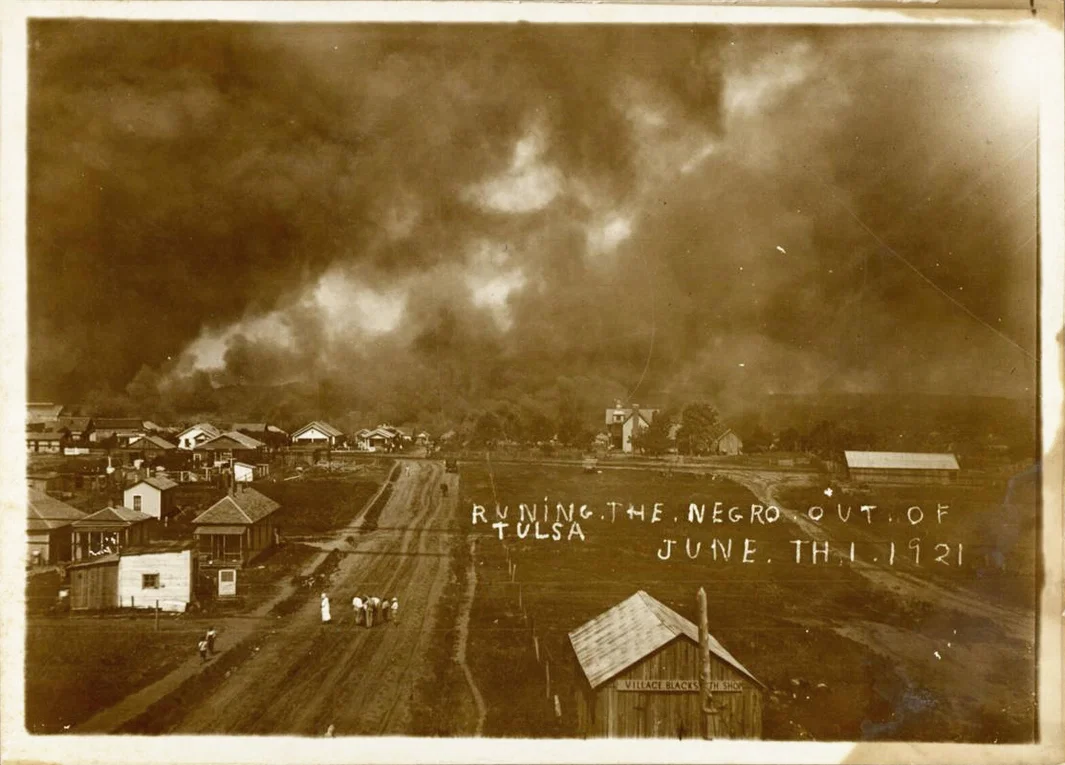
The 1921 Tulsa Massacre: The Retelling of Resilience
About the Research
For much of the twentieth century, the history of the 1921 Tulsa Race Massacre was minimally scaled across the United States. This study sheds light examining how stories of the life experiences of survivors thrived shaping strategies, identity, and community engagement. By giving rise to the descendants' voice about one of the deadliest incidents of racial violence in U.S. history, the research gives rise to resilience as a culturally embedded, multi-level strategy for people of color.
Greenwood was developed in the Greenwood district of Tulsa, Oklahoma, built on what had formerly been Indian Territory. Established in 1906 when a wealthy Black entrepreneur named O.W. Gurley purchased 40 acres of land and laid the foundation for the community, by 1920 it had grown into a self-contained, segregated hub supporting roughly 11,000 residents and hundreds of businesses.
Termed "Negro Wall Street" or "Black Wall Street" by Booker T. Washington due to its remarkable economic self-sufficiency and wealth, it featured doctors, lawyers, real estate agents, luxury shops, modern hotels, movie theaters, grocery stores, and its own banks and newspaper (such as the Tulsa Star). Money stayed within Greenwood; a single dollar is famously noted to have circulated within the community anywhere from 19 to 100 times before leaving. Multiple residents and business owners held fortunes valued between $25,000 and $500,000, equivalent to hundreds of thousands or millions today. Was the affluence of Greenwood enough to bring about its destruction? Historians say it was.
Join a study of family strength and share your family stories